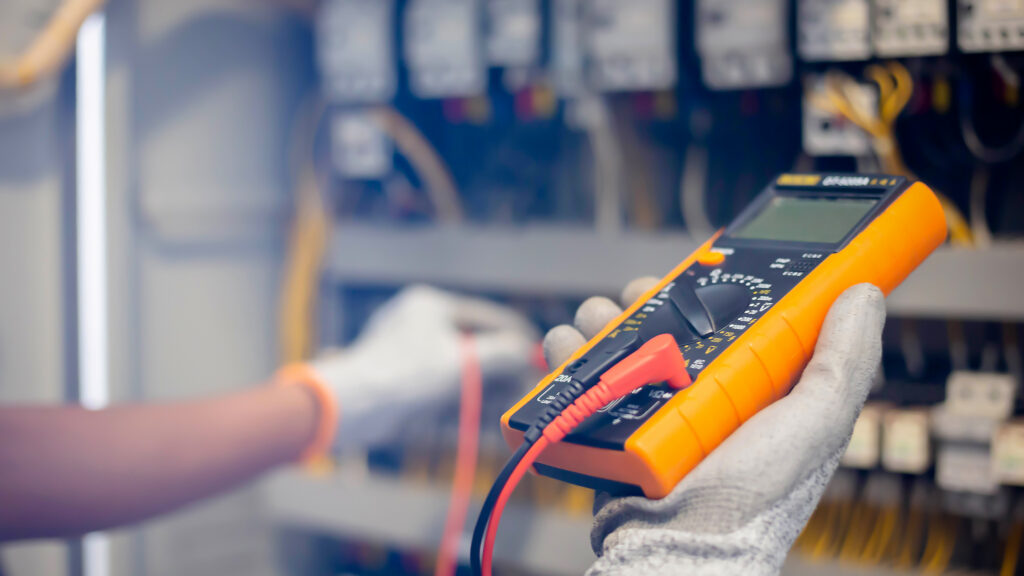
Multimeter Calibration: Functions, Specifications, and Common Failures
A digital multimeter (DMM) is the first instrument most technicians reach for, which means its readings feed decisions all day: pass or fail, safe or energized, in spec or out. If the meter is wrong, every one of those decisions is built on a bad number.
Multimeter calibration verifies every function and range against traceable standards. This guide covers what multimeters measure, how calibration is performed, and the problems that cause meters to fail.
Multimeter Capabilities
Voltage, Current, and Resistance Measurement
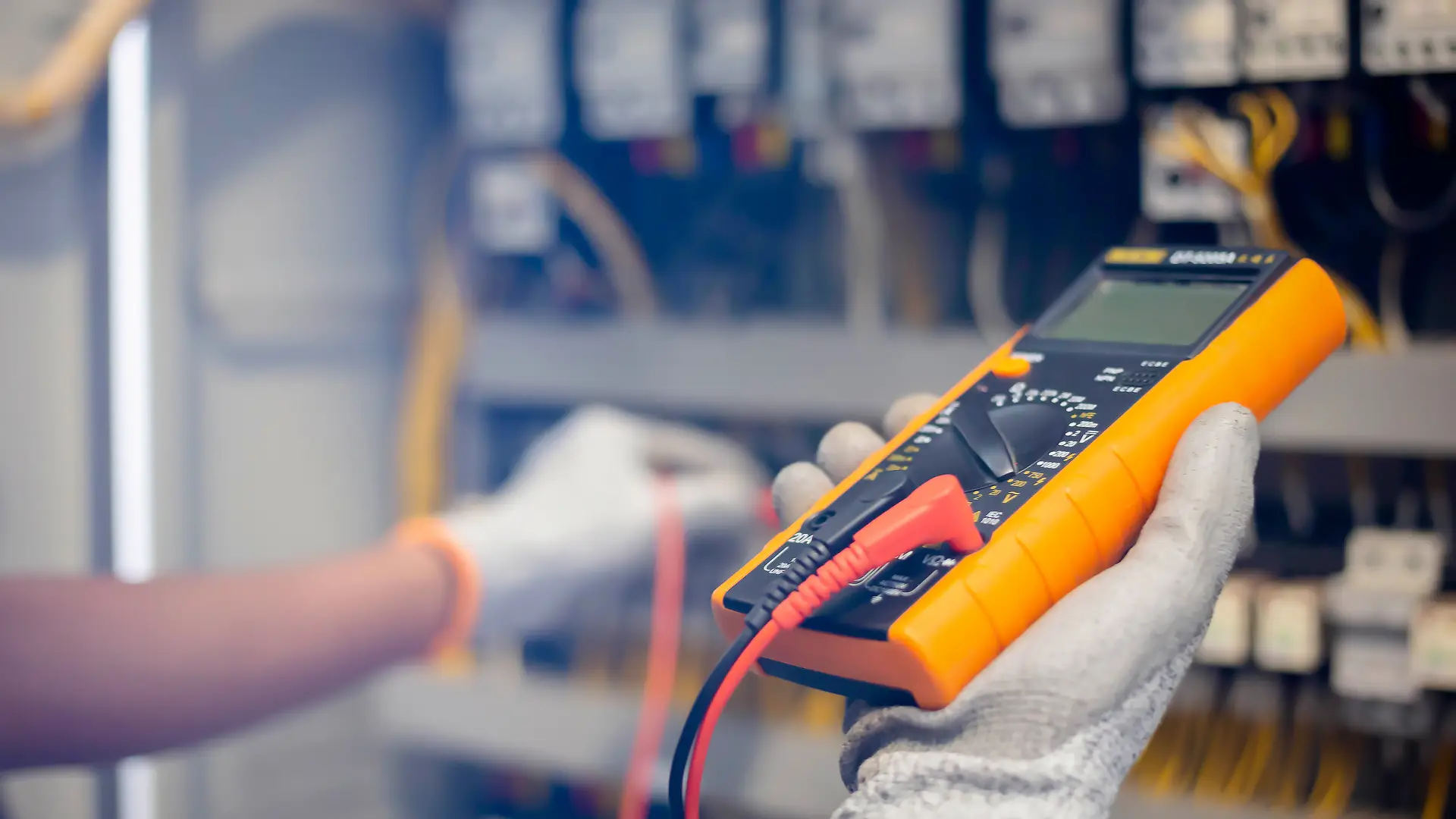
Every multimeter measures DC and AC voltage, DC and AC current, and resistance. Many also measure frequency, capacitance, temperature, and diode and continuity functions. Each function has multiple ranges, and each range has its own accuracy specification.
AC measurement deserves attention. True RMS meters measure the effective value of any waveform. Average-responding meters are accurate only on clean sine waves and read incorrectly on the distorted waveforms common around variable frequency drives and switching power supplies.
Digital vs. Analog Technologies
Analog multimeters use a moving-coil meter movement. They show trends well but are less accurate and harder to read precisely. Digital multimeters convert the input with an analog-to-digital converter and display the result in counts or digits. Handheld DMMs commonly offer 6,000 to 50,000 counts; bench DMMs range up to 6½ digits and beyond for laboratory work.
Safety Ratings and Compliance
Multimeters used on electrical systems carry measurement category ratings under IEC 61010: CAT II, CAT III, and CAT IV, with a voltage rating for each. The category reflects the transient energy the meter can withstand, which depends on where in the electrical system it is used. A meter’s rating is only as good as its condition: damaged leads, cracked cases, or incorrect fuses compromise it.
Calibration Standards
Multi-Function Verification Procedures
Multimeters are calibrated against a multifunction calibrator and other reference standards that are significantly more accurate than the meter under test. The lab follows the manufacturer’s performance verification procedure, testing each function at points across each range, including AC voltage and current at multiple frequencies.
Accuracy Specifications by Range
DMM accuracy is specified as ±(percentage of reading + number of counts), for example ±(0.5% + 2 counts). The count term matters most at the low end of a range, which is why calibration tests near both ends. A meter can pass at full scale and fail near zero on the same range.
Safety Verification Requirements
Calibration includes functional safety checks: correct fuse type and rating, input jack condition, case integrity, and continuity of the test leads supplied. These checks confirm the meter is in safe working condition. They do not re-certify the manufacturer’s IEC 61010 rating.
Common Calibration Concerns
Input Protection Damage
Measuring voltage with the leads in the current jacks is the classic way to blow a fuse or damage a current shunt. Overvoltage events can damage input protection components and shift readings on the affected function. A meter that has seen an overload should be checked before it is trusted again.
Display and Conversion Errors
Missing display segments can turn an 8 into a 0 or a 6. Analog-to-digital converter drift affects accuracy across all functions. Both are caught by systematic multi-point testing.
Battery and Power Supply Issues
Low battery voltage can cause unstable or inaccurate readings before the low-battery indicator appears. Replace batteries before calibration so the meter is evaluated in normal working condition. Bench meters with failing power supplies show noise and drift.
EML Calibration Services for Multimeters
EML Calibration is ISO/IEC 17025:2017 accredited by Perry Johnson Laboratory Accreditation. We calibrate bench and handheld digital multimeters across DC and AC voltage, current, and resistance.
- All functions and ranges tested. Verification follows the manufacturer’s procedure, with as-found and as-left data at every test point.
- NIST-traceable standards. Every certificate states measurement uncertainty and traceability.
- Nationwide on-site service. Our mobile labs perform on-site electronic calibration nationwide, so meter fleets stay with the teams that use them.
- Fleet tracking. The EML asset management platform tracks due dates and sends automated expiration notifications.
Frequently Asked Questions
How often should a multimeter be calibrated?
Most manufacturers specify accuracy for a one-year calibration interval, and 12 months is the most common starting point. Adjust the interval based on use, environment, and as-found history.
What is tested during multimeter calibration?
Each function and range is tested at multiple points, including DC and AC voltage, DC and AC current, and resistance, with AC tested at multiple frequencies. Calibration also includes functional safety checks of fuses, input jacks, and case condition.
Can multimeters be calibrated on site?
Yes. EML Calibration performs on-site electronic calibration nationwide with mobile laboratories, so multimeters are calibrated without shipping them out.
Get Your Multimeters Calibrated
Send us your meter list with make, model, and quantity, and tell us whether you need in-lab or on-site service. Request a Quote