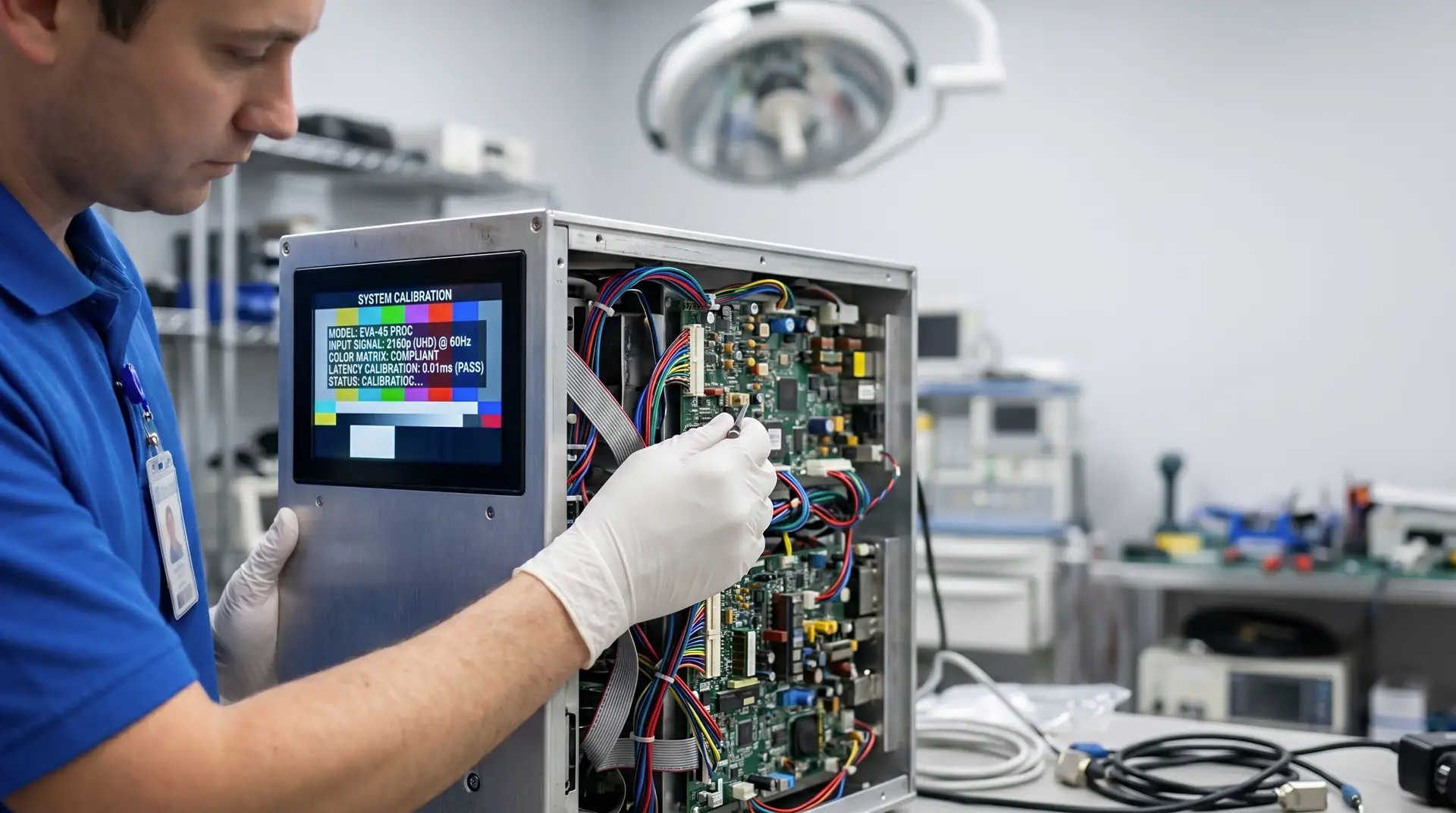
When you manufacture medical devices, calibration isn’t optional, it’s a compliance requirement that directly affects patient safety and audit outcomes. ISO 13485 holds you accountable for every measurement that influences product conformity. Get it wrong, and you’re looking at nonconformances, failed audits, or worse. Understanding exactly what the standard demands from your equipment, your lab, and your records is where most manufacturers stumble. What follows breaks it all down.
Why Measurement Errors Directly Cause ISO 13485 Nonconformances
When your measuring equipment drifts out of tolerance, it doesn’t just produce bad numbers, it triggers a chain reaction that runs straight into ISO 13485 nonconformance territory.
ISO 13485 requires that you control monitoring and measuring equipment to guarantee results are valid. If your calibration records are incomplete, your intervals aren’t justified, or your equipment lacks traceability to national standards, auditors will cite you directly under Clause 7.6.
The consequences extend beyond paperwork. Measurement errors corrupt inspection data, invalidate process outputs, and compromise product release decisions.
You may have shipped devices that failed dimensional, electrical, or biological acceptance criteria without knowing it. That’s not just a quality problem, it’s a patient safety risk that regulators treat with serious scrutiny.
Which Equipment Requires Calibration Under ISO 13485?
ISO 13485 doesn’t give you an exhaustive equipment list, but Clause 7.6 makes your obligation clear: if a piece of equipment affects product conformity, you’re responsible for controlling and calibrating it.
In practice, that covers a broad range of instruments. Dimensional tools like calipers, micrometers, and gauges need calibration.
So do pressure gauges, torque wrenches, force testers, and temperature-monitoring equipment used in manufacturing or sterilization processes.
Electrical test equipment, including multimeters, oscilloscopes, and hipot testers, fall under the same requirement.
Environmental monitoring systems that verify cleanroom or storage conditions also qualify.
If you’re unsure whether a specific instrument applies, ask one question: could an inaccurate reading from this device result in a nonconforming product reaching a patient? If yes, calibrate it.
What Does ISO 13485 Require From Your Calibration Lab?
Calibrating your equipment in-house or outsourcing to a third party both work under ISO 13485, but either way, your calibration lab must meet the requirements outlined in Clause 7.6.
Your lab needs documented procedures, trained personnel, and calibration standards traceable to national or international measurement standards. ISO 13485 references ISO/IEC 17025 as the benchmark for calibration competence, so accreditation to that standard strengthens your compliance position considerably.
If your lab isn’t accredited, you’ll need to demonstrate equivalent technical competence through records, qualifications, and validation data. Auditors will expect calibration certificates that show measurement uncertainty, traceability chains, and pass/fail results against defined acceptance criteria.
Choosing a calibration partner that understands medical device requirements isn’t optional, it directly affects your product safety and regulatory standing.
How Does ISO 13485 Shape Your Calibration Interval Schedule?
Setting calibration intervals isn’t a one-size-fits-all decision under ISO 13485, the standard requires you to base them on risk, equipment history, and manufacturer recommendations rather than arbitrary timeframes.
If a torque wrench is used daily on critical implantable components, it likely needs more frequent calibration than a thermometer in a low-risk storage area.
You’ll need to document your rationale for every interval you set. Auditors expect to see that logic, not just a spreadsheet with annual dates.
When equipment shows repeated out-of-tolerance findings, you’re expected to shorten the interval and investigate the root cause.
Conversely, consistent in-tolerance results with solid historical data can justify extending intervals, but only with documented evidence supporting that decision.
Risk drives everything here.
What Calibration Records Do Auditors Actually Expect?
When auditors walk into your facility, calibration records are one of the first things they’ll pull, and what they’re looking for goes well beyond a simple pass/fail sticker on your equipment.
Every calibration record needs to identify the equipment, its unique ID, the calibration date, the due date, and the technician who performed the work. Auditors also expect to see actual measurement data, not just a certificate stating the equipment passed.
You’ll need documented traceability to national or international measurement standards, the acceptable tolerance range, and the as-found and as-left values. If equipment was adjusted, that adjustment must be recorded.
Incomplete records, missing traceability chains, or certificates without raw data are common findings that can trigger nonconformances and delay your certification or renewal audit.
How to Handle Out-of-Tolerance Equipment Without Triggering a Major Nonconformance
Out-of-tolerance equipment doesn’t have to become a major nonconformance, but only if you respond to it systematically and document every step.
The moment you identify an out-of-tolerance condition, initiate a nonconformance report and quarantine the equipment immediately.
Next, assess impact. Determine which products, processes, or measurements that equipment influenced since its last confirmed in-tolerance calibration.
If affected product reached customers, you’ll need a formal impact assessment and possibly a CAPA.
Auditors won’t penalize you for discovering a problem, they’ll penalize you for ignoring it or responding inconsistently.
Your procedure should define response timelines, investigation depth, and who has the authority to disposition affected product.
Close every out-of-tolerance event with documented root cause analysis, corrective action, and evidence of effectiveness verification.
That’s what separates a manageable finding from a major nonconformance.
Common Calibration Findings in Notified Body Audits
Notified body auditors see the same calibration failures cycle through audit reports year after year, and knowing what they’re looking for can save you from preventable findings.
The most cited issues include expired calibration dates on active equipment, missing traceability documentation linking standards to NIST or equivalent bodies, and calibration records that don’t match the equipment actually in use.
Auditors also flag intervals set without documented risk justification, certificates lacking measurement uncertainty values, and out-of-tolerance events with no documented impact assessment.
Informal calibration performed by in-house staff without verified competency records is another frequent trigger.
Your best defense is a well-maintained equipment register, current certificates, and a clear procedure that connects every step, from scheduling to out-of-tolerance response, back to your quality management system.
Five Criteria Your ISO 13485 Calibration Provider Must Meet
Choosing the wrong calibration provider can introduce compliance gaps that don’t surface until an audit, so vetting your partner against clear, regulation-aligned criteria matters.
First, confirm they hold ISO/IEC 17025 accreditation; this validates their technical competence and measurement traceability.
Second, verify their scope covers your specific equipment types, general accreditation doesn’t automatically qualify them for your instruments.
Third, guarantee they understand ISO 13485 documentation expectations, including uncertainty statements and calibration certificates formatted for regulatory review.
Fourth, check that they support your risk-based interval scheduling rather than applying one-size-fits-all timelines.
Fifth, confirm they have a defined process for reporting out-of-tolerance results so you can trigger corrective action immediately.
A provider meeting all five criteria becomes an extension of your quality system, not a liability.
Calibration You Can Trust for Every Device You Build
EML Calibration is ISO/IEC 17025:2017 accredited and NIST-traceable, giving medical device manufacturers the documented competence and measurement confidence ISO 13485 demands. From dimensional tools to electrical test equipment, our team helps you build a calibration program that holds up under notified body scrutiny.
Request a quote today to see how EML Calibration can support your ISO 13485 compliance.