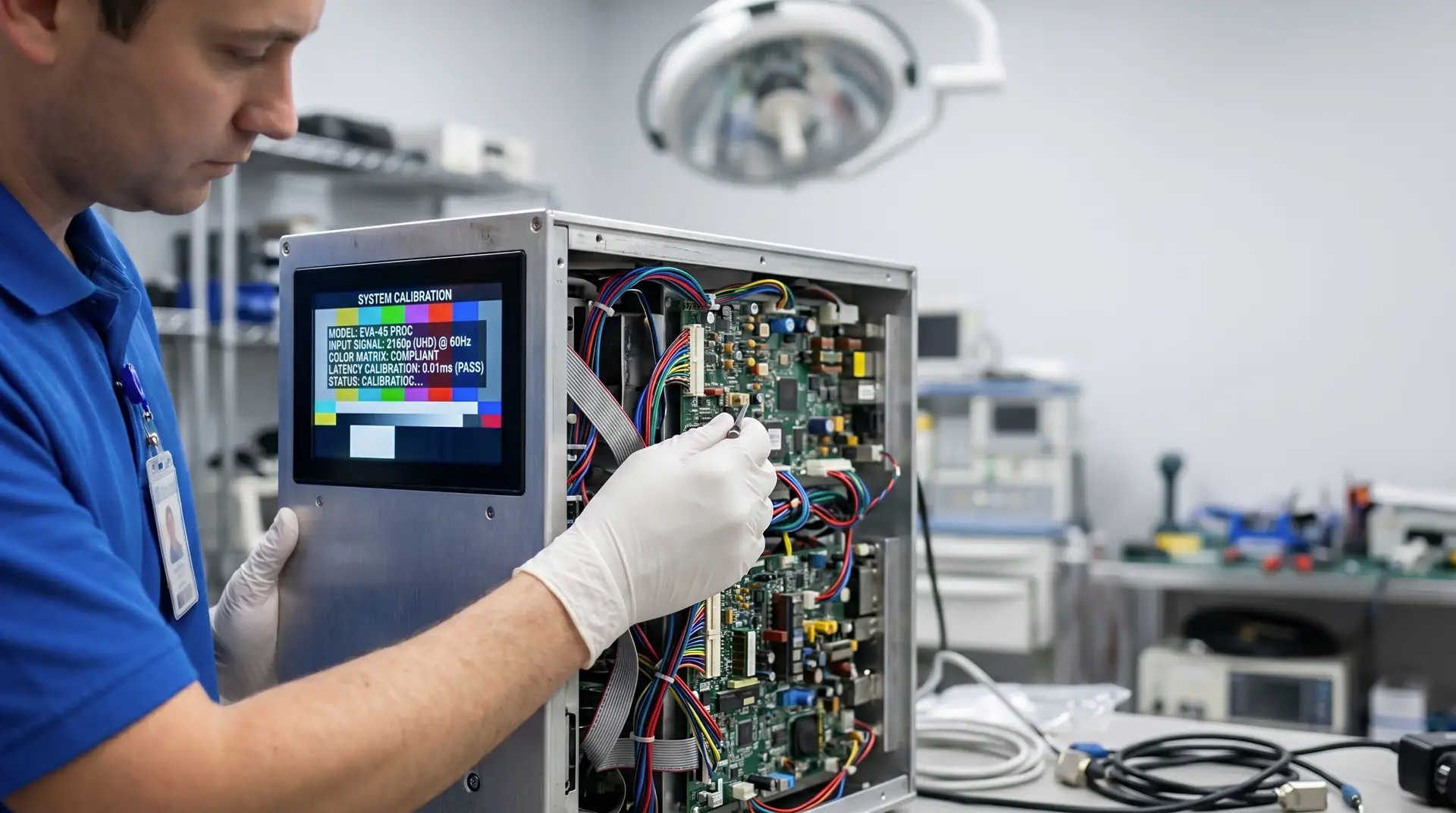

Ignoring AS9100 calibration requirements in your aerospace lab could mean failed audits, grounded production, and liability exposure you never saw coming.
If you work in aerospace manufacturing or quality assurance, calibration isn’t just a routine checkbox. It’s a compliance requirement with real consequences. AS9100 sets strict expectations for how you manage, document, and verify your measurement equipment. Get it wrong, and you’re looking at failed audits, grounded production, and serious liability exposure. Understanding exactly what AS9100 demands, and how it differs from other standards, is where you need to start.
What Does AS9100 Actually Require for Calibration?
When you’re working toward AS9100 certification, the calibration requirements sit under Clause 7.1.5: Monitoring and Measuring Resources. This clause demands that you identify every piece of equipment affecting measurement validity, calibrate it against recognized calibration standards, and document the results.
You’re also required to determine measurement uncertainty and guarantee it doesn’t compromise your compliance assessment outcomes. Equipment validation isn’t optional. You must confirm that instruments remain fit for their intended purpose throughout their service life.
AS9100 goes further than ISO 9001 by emphasizing quality assurance within a risk-based framework, meaning calibration failures must trigger corrective action.
You need traceable records, defined intervals, and a clear process for handling out-of-tolerance findings. Every requirement connects directly to product safety and airworthiness. AS9100 Rev D, published by SAE International, is the current revision governing these requirements for the aviation, space, and defense industries.
What’s at Stake When AS9100 Calibration Fails
Calibration failures in aerospace don’t just trigger audit findings. They put lives at risk. The calibration risks you face touch every corner of your operation. When your measurement data can’t be trusted, here’s what follows:
- Safety Concerns — Faulty measurements lead to defective parts on aircraft, creating catastrophic failure potential.
- Compliance Consequences — You’ll face nonconformances, corrective action requirements, or suspended certification.
- Financial Implications — Recalls, rework, and lost contracts drain resources fast.
- Reputation Damage — Customers notice, and in aerospace, word travels quickly.
You’ve spent years building credibility. A single calibration gap can unravel customer trust, invite regulatory scrutiny, and sideline your operation entirely. Don’t underestimate what’s on the line.
How AS9100 Calibration Differs From ISO 9001
Both AS9100 and ISO 9001 require you to control measuring and monitoring equipment, but AS9100 goes further in ways that matter considerably in aerospace.
ISO 9001 establishes baseline calibration standards, while AS9100 adds explicit requirements around risk management, traceability, and equipment selection that reflect aerospace’s zero-tolerance environment.
Where ISO 9001 gives you flexibility, AS9100 closes gaps that create compliance challenges in high-stakes manufacturing.
You’re expected to document calibration status more rigorously, justify interval decisions, and demonstrate continuous improvement in how your measurement processes perform over time.
Auditors familiar with industry best practices will look beyond whether equipment is calibrated. They’ll examine whether your entire system is defensible. That distinction separates a compliant aerospace lab from one that simply meets minimum quality management requirements.
What NIST Traceability Actually Means for Aerospace Calibration
NIST traceability gets referenced constantly in aerospace quality discussions, but it’s frequently misunderstood. It doesn’t mean NIST calibrates your equipment directly. It means your calibration processes link back to NIST standards through an unbroken chain of documented comparisons.
For aerospace precision, that chain must be airtight. Here’s what traceability actually requires:
- Each calibration references a higher-level standard with known measurement accuracy.
- Every standard in the chain holds valid, documented calibration certificates.
- Uncertainties are calculated and carried through each level.
Equipment reliability depends on that chain remaining unbroken between calibration cycles. If any link is missing, your traceability claim collapses. AS9100 auditors will follow that chain during reviews, so you need complete records at every level, not just your own lab’s certificates. For a deeper look at what those uncertainty values on your certificates actually mean, see our post on measurement uncertainty and calibration certificates.
How AS9100 Defines Calibration Intervals and How to Set Yours
Maintaining an unbroken traceability chain only holds value if your equipment gets recalibrated before its accuracy degrades. AS9100 doesn’t prescribe fixed calibration frequency. It requires you to determine intervals based on risk assessment and equipment lifecycle considerations.
That means you’re responsible for analyzing how each tool’s drift rate, usage intensity, and failure consequences affect product conformity.
Start with an impact analysis: if a torque wrench calibration failure could cause structural assembly errors, shorten its interval. Lower-risk instruments can run longer between calibrations. EML’s asset management services give you a structured system for tracking intervals, documenting rationale, and flagging equipment due for recalibration before it becomes an audit finding.
Document your rationale thoroughly. Auditors want to see defensible compliance strategies, not arbitrary schedules.
Review intervals whenever equipment fails calibration, experiences damage, or enters a new application. Your calibration interval process should be living, evidence-based, and directly tied to the risks your operation actually carries.
AS9100 Calibration Records Your Lab Needs Before an Audit
When an AS9100 auditor walks into your lab, your calibration records are the first thing they’ll want to see, and gaps in that documentation can stop an audit cold.
Strong record keeping isn’t optional. It’s your compliance checklist in action. For solid audit preparation, every calibration documentation package should include:
- Equipment identification, including serial numbers and asset tags
- Calibration frequency schedules with clearly justified intervals
- Calibration certificates showing NIST-traceable measurements and pass/fail results
- Records of out-of-tolerance findings and corrective actions taken
Auditors cross-reference these documents against your actual equipment status. If a certificate is expired, missing, or lacks traceability details, you’ll face a nonconformance.
Organizing records by equipment type and maintaining a master calibration log makes the review process considerably faster and less stressful. Our practical guide on how to prepare your equipment for calibration covers exactly what documentation you should have in hand before your instruments leave the facility.
Why Auditors Care Whether Your Calibration Lab Is ISO/IEC 17025 Accredited
AS9100 auditors don’t just want proof that your equipment was calibrated. They want confidence that the lab doing the calibration actually knows what it’s doing. That’s where ISO/IEC 17025 accreditation becomes critical to your audit preparedness.
Accreditation importance goes beyond a certificate on the wall. It signals that the lab operates under a validated quality assurance framework, follows documented procedures, and produces technically sound results.
These are exactly the benefits that give auditors what they’re looking for: evidence of lab reliability backed by third-party verification. When you use an accredited lab, you’re not just checking a box. You’re demonstrating that your measurement process meets a recognized international standard, something unaccredited labs simply can’t guarantee, regardless of how experienced their technicians claim to be. You can verify a lab’s current accreditation status and scope through the A2LA accredited organizations directory.
The Most Common Calibration Gaps Found in AS9100 Audits
Even with a solid calibration program in place, gaps still surface during AS9100 audits, and they tend to cluster around the same recurring issues. Understanding these calibration challenges helps you sharpen your audit preparation and avoid costly findings.
The most common pitfalls auditors flag include:
- Expired calibration labels on equipment still actively used in production.
- Missing traceability documentation that can’t link measurements back to NIST standards.
- Undefined calibration intervals with no documented rationale supporting the frequency chosen.
- Poor equipment management records that omit out-of-tolerance events or corrective actions taken.
Your compliance strategies should directly address each of these areas before an auditor does. Proactive internal audits remain your strongest defense against findings that disrupt certification and delay production schedules. The International Aerospace Quality Group (IAQG), which maintains the AS9100 standard, also publishes supplemental guidance and common audit findings that quality teams can use to stress-test their own programs.
How to Evaluate a Calibration Lab’s AS9100 and 17025 Credentials
Knowing where your calibration gaps are only gets you halfway there. The other half is making sure the lab you hire is actually qualified to close them.
Start by confirming ISO/IEC 17025 accreditation. It’s the baseline proof that a lab’s calibration processes meet recognized technical competency standards.
Don’t just take their word for it. Verify the accreditation scope covers your specific equipment compliance needs through the issuing body’s public registry.
Ask whether their quality assurance system aligns with AS9100 requirements, not just generic ISO 9001.
Review their calibration standards documentation to confirm NIST-traceable references.
Check how they handle out-of-tolerance findings and whether they communicate those results clearly.
Lab accreditation means nothing if the scope doesn’t match your instrumentation, so read the certificate carefully before signing anything. EML provides a full range of calibration services with documented scope — confirm your instrument types are covered before you send anything our way.
Partner with EML Calibration for AS9100-Ready Results
When your aerospace certification is on the line, the calibration lab you choose matters as much as your internal processes. EML Calibration has been an ISO/IEC 17025:2017 accredited calibration provider since 1997, delivering NIST-traceable results with the documentation quality that AS9100 auditors expect. From defining defensible calibration intervals to handling out-of-tolerance findings with full transparency, EML gives your quality team the support it needs to stay compliant and audit-ready. Request a quote today and find out how EML Calibration can strengthen your aerospace quality program.