Your torque wrench needs regular calibration to prevent catastrophic equipment failures and workplace injuries. ISO 6789 standards mandate verification annually or after 5,000 cycles, with accuracy tolerances of ±4% for click-type wrenches. Factors like material fatigue, improper handling, and environmental conditions degrade accuracy over time. You’ll need professional calibration services with NIST traceability to guarantee your tools meet recognized standards and provide documented proof of compliance. Understanding proper testing procedures and maintenance schedules helps you maintain reliable fastening operations throughout your facility.
Understanding Torque Measurement and Its Critical Role in Industry
Why does a difference of just a few foot-pounds matter so much in industrial applications? The applications significance becomes clear when you consider that under-torqued fasteners can loosen during operation, while over-torqued ones risk material failure. Industrial safety importance can’t be overstated—improper torque directly causes equipment failures, structural collapses, and workplace injuries.
Proper usage practices require understanding your tool’s capabilities and limitations. You’ll need to match the wrench type to your specific task, whether you’re working in automotive assembly, aerospace manufacturing, or heavy equipment maintenance. Ideal utilization strategies include regular calibration schedules and documented verification procedures.
Fastening process optimization depends on maintaining accurate torque delivery, ensuring every connection meets engineering specifications. Your torque measurements must remain consistently precise to protect both personnel and equipment integrity.
ISO 6789 Standards and Compliance Requirements for Torque Tools
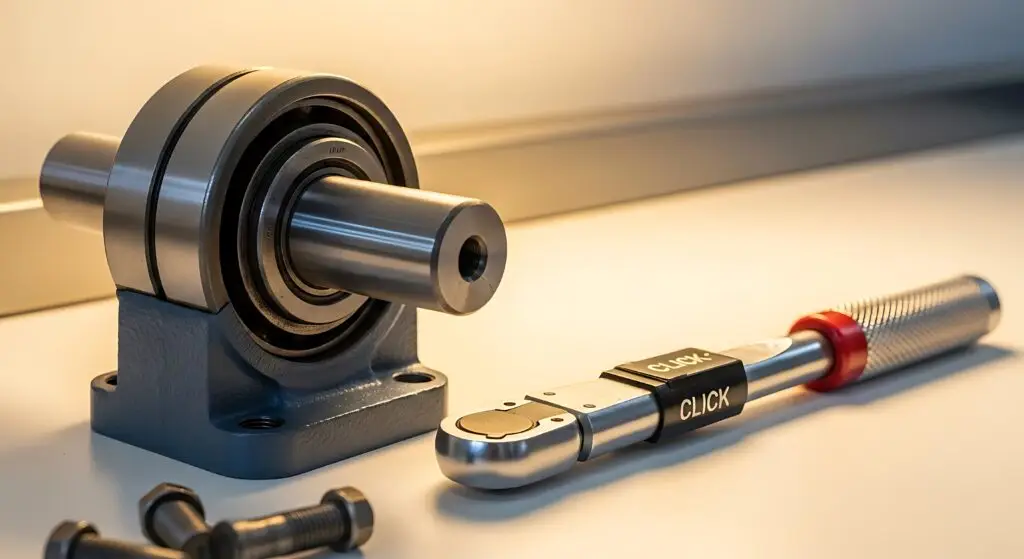
When you’re selecting and maintaining torque tools, ISO 6789 serves as the international standard that defines accuracy requirements, adjustment procedures, and performance specifications. This standard establishes permissible deviation limits—typically ±4% for click-type wrenches and ±6% for beam-type tools—ensuring consistent performance across industries.
You’ll need to follow specific adjustment requirements, including annual verification intervals or after 5,000 cycles, whichever comes first. The standard mandates proper loading procedures during testing, applying torque at specified points along the wrench’s range. Your traceability documentation must connect measurements to national standards through an unbroken chain of comparisons.
Environmental influences like temperature and humidity can affect readings, so you should recalibrate under controlled conditions. Maintaining current certification maintenance records demonstrates compliance during audits and quality reviews.
Factors That Compromise Torque Tool Accuracy Over Time
Over time, your torque wrench’s accuracy will break down through several mechanical and environmental pathways. Material fatigue develops in springs and calibration mechanisms through repeated use, causing measurement drift. You’ll find that improper handling—like dropping tools or over-torquing beyond capacity—accelerates internal component wear and misalignment.
Storage conditions greatly impact calibration stability. Leaving your wrench under tension, exposing it to moisture, or storing it in extreme temperatures degrades precision. Environmental influences during use, including humidity and temperature fluctuations, alter metal properties and affect readings.
User mistakes compound these issues. Incorrect loading angles, rapid force application, and neglecting manufacturer maintenance guidelines all contribute to premature accuracy loss. Regular calibration catches these degradation patterns before they compromise your critical fastening applications.
Best Practices for Torque Calibration Testing and Procedures
Understanding what degrades torque tool accuracy makes proper calibration testing procedures necessary for maintaining reliable measurements. You’ll need to follow systematic protocols that guarantee consistent, traceable results.
Essential calibration procedures include:
- Pre-testing inspection of wear indicators and mechanical components
- Multiple loading cycles using proper loading techniques across the tool’s range
- Documentation of environmental conditions and readings at each test point
You should implement extensive tool maintenance schedules between calibrations. Storage recommendations specify keeping tools at their lowest settings in controlled environments. Consider on site calibration for large equipment or high-volume operations to minimize downtime.
Effective user training guarantees operators understand correct application methods and recognize signs requiring recalibration. This combination maintains accuracy throughout service intervals.
Professional Calibration Services and NIST Traceability
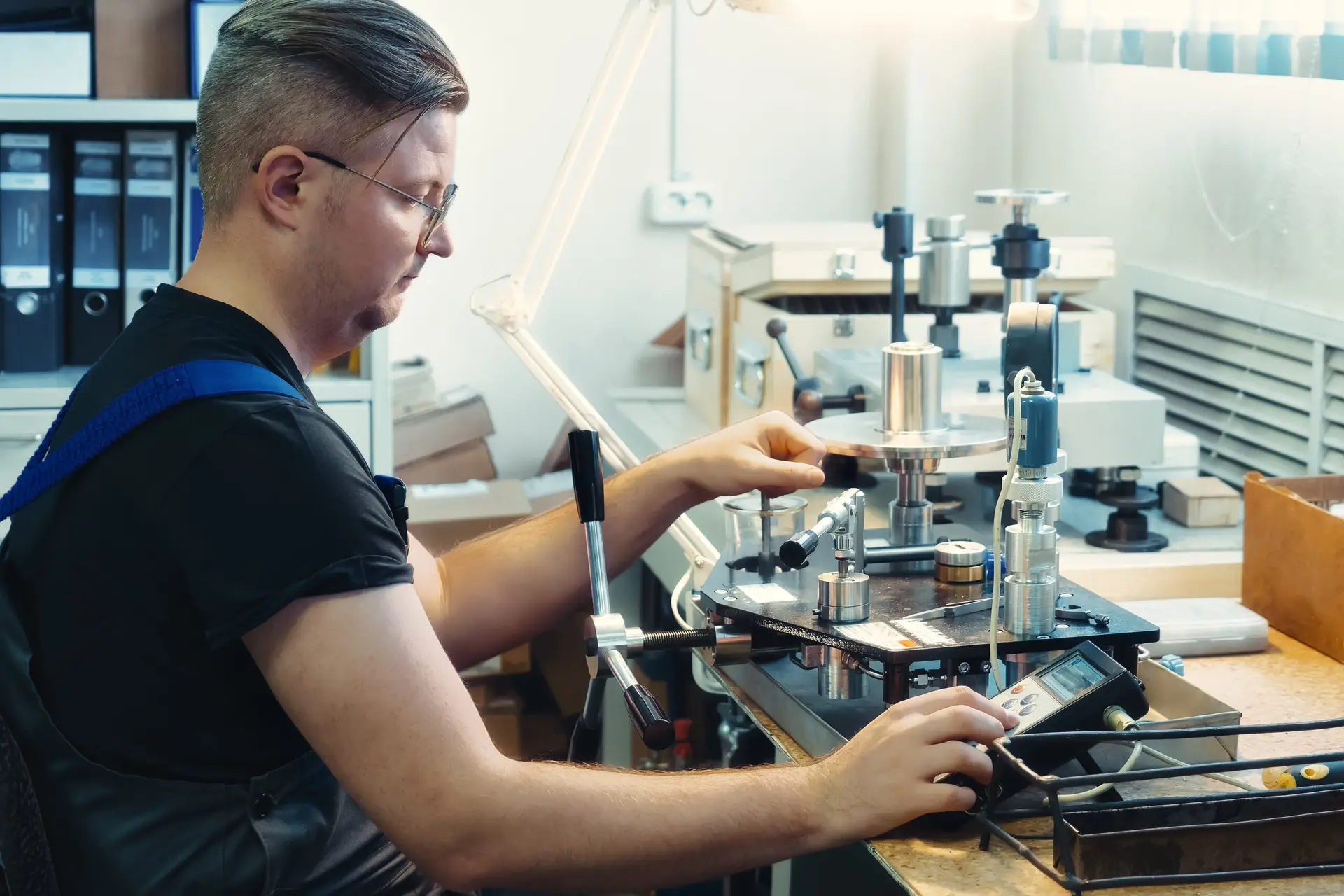
Professional torque calibration requires measurement equipment that maintains an unbroken chain of traceability to NIST (National Institute of Standards and Technology). When you partner with accredited testing services, you’ll receive certified calibration reports that document your tool’s performance against recognized standards. These quality assurance protocols guarantee your torque instruments meet ISO 6789 requirements.
Reputable calibration laboratories offer thorough service offerings covering click-type, beam, digital, and hydraulic torque tools across various ranges. They employ specialized calibration equipment designed specifically for precision torque measurement. Your calibration certificate should detail test points, as-found and as-left conditions, and measurement uncertainty. This documentation proves compliance during audits and verifies your commitment to quality. Choose providers who maintain their own NIST-traceable standards and follow documented procedures for consistent, reliable results.
Partner with EML Calibration for Expert Torque Tool Services
You can’t afford to compromise on torque accuracy when your critical fastening applications demand precision. Regular calibration isn’t optional—it’s essential for maintaining ISO 6789 compliance, preventing costly failures, and ensuring operator safety. Don’t wait until measurement drift causes problems. Partner with accredited calibration services that provide NIST traceability and proper documentation. By implementing consistent calibration schedules and following best practices, you’ll protect your operations, maintain quality standards, and deliver reliable results every time.
EML Calibration brings over 25 years of ISO/IEC 17025:2017 accredited expertise to your torque calibration needs. Contact us today to schedule your calibration service or request a quote. We offer flexible options including on-site calibration, fast turnaround times, and comprehensive certification documentation to keep your operations running smoothly.