You’ve likely noticed inconsistencies in your measurement results, but have you considered that your optical comparator might be the culprit? When your device drifts out of calibration, you’re fundamentally making critical quality decisions with a ruler that’s no longer accurate. The parts you’re accepting today could fall outside specification tomorrow—and you won’t know until customer complaints start rolling in. Here’s what’s actually happening during calibration and why it matters more than you think.
Why Optical Comparator Calibration Protects Quality Control
Because optical comparators serve as the backbone of dimensional inspection in manufacturing environments, their calibration directly impacts every measurement decision you make.
When your comparator’s optical orientation drifts from specification, you’re unknowingly accepting defective parts or rejecting good ones—both costly mistakes.
Regular calibration guarantees measurement precision remains within tolerance, protecting your quality assurance programs from systematic errors.
Uncalibrated systems introduce magnification inaccuracies, stage positioning errors, and projection distortions that compound over time.
You can’t catch dimensional defects if your measurement tool itself is unreliable.
Calibrated optical comparators provide the confidence you need when certifying parts, validating supplier components, or conducting first-article inspections.
They transform subjective visual checks into quantifiable, defensible measurements that support your quality documentation and regulatory compliance requirements.
What Technicians Verify in Calibration Checks
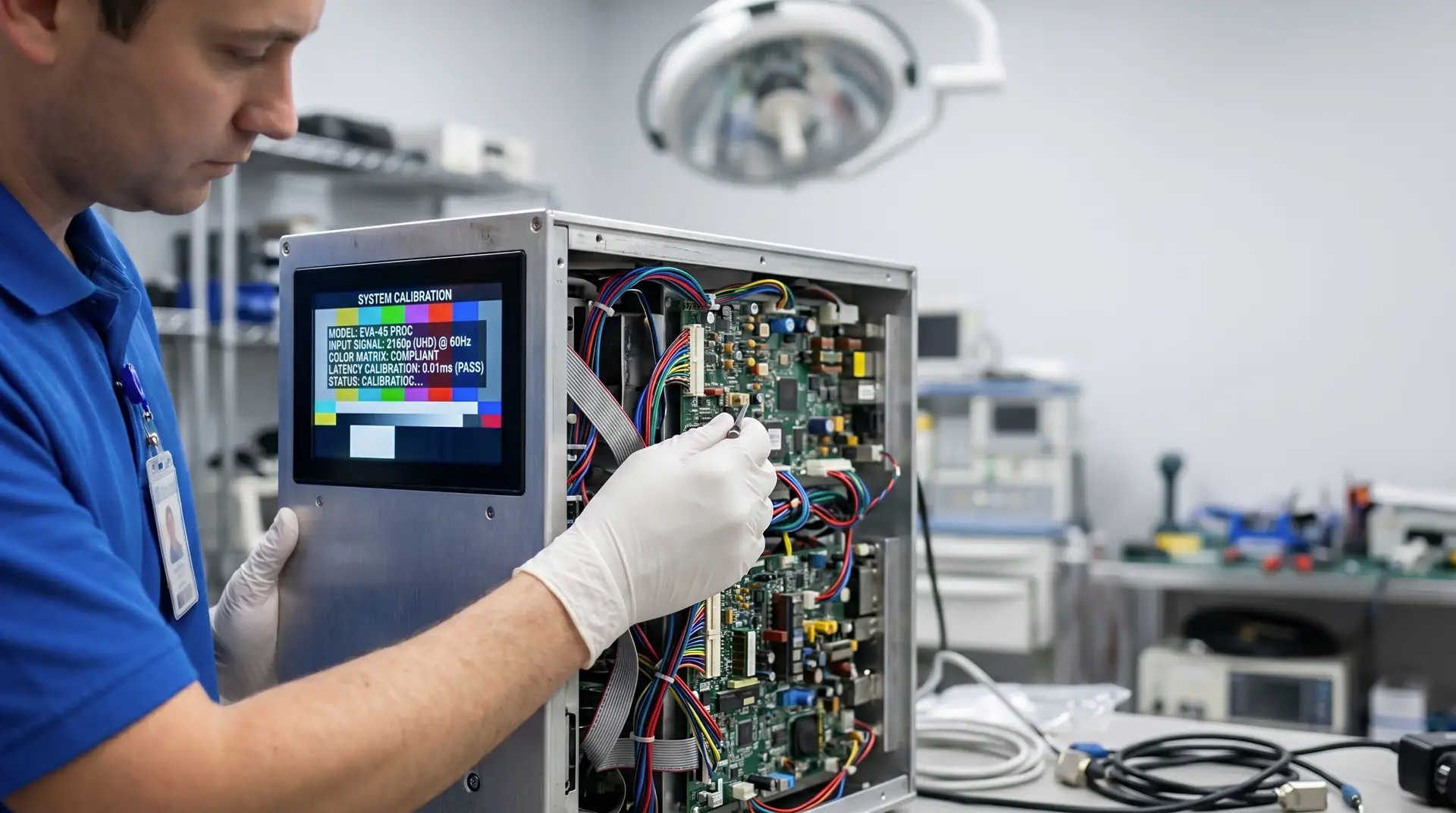
During a thorough optical comparator calibration, technicians systematically assess multiple measurement systems within your equipment. They’ll confirm magnification accuracy across all lens settings, ensuring your projected measurements match actual part dimensions.
Stage movement receives careful scrutiny—technicians check for backlash, straightness, and positioning accuracy in both X and Y axes.
Optical clarity becomes critical during inspections. Technicians examine the light source intensity, lens condition, and screen quality to ensure sharp, distortion-free projections.
They’ll test measurement repeatability by measuring the same feature multiple times, documenting consistency within specified tolerances.
Technician expertise proves essential when evaluating system positioning and angular accuracy. They’ll use certified reference standards to verify readings, adjust components as needed, and provide documentation proving your comparator delivers reliable, traceable measurements for quality control operations.
Why Optical Comparator Calibration Fails
When optical comparators fail calibration, the root cause typically traces back to mechanical wear, environmental factors, or maintenance neglect.
Stage backlash develops over time, compromising measurement consistency across your inspection process. Lens degradation and light source deterioration reduce optical accuracy, making precise measurements impossible.
Temperature fluctuations create calibration challenges by affecting dimensional stability of both the instrument and workpieces.
You’ll notice that dirty optical elements scatter light incorrectly, distorting projected images. Worn drive mechanisms prevent repeatable stage positioning, while damaged screens affect edge detection.
Environmental contaminants accelerate component degradation.
Without regular cleaning and preventive maintenance, these issues compound. Your comparator needs controlled conditions and systematic care.
Professional calibration identifies these problems before they compromise your quality control operations, ensuring reliable visual measurement verification.
On-Site vs Lab Calibration: Choosing the Right Service
Since optical comparators are precision instruments sensitive to movement and environmental changes, you’ll face a critical decision: adjust on-site or send your equipment to a lab.
Service comparison reveals distinct advantages for each approach:
- On-site benefits include zero transportation risk, minimal downtime, and calibration in your actual operating environment.
- Lab advantages feature controlled temperature and humidity, access to reference standards, and extensive optical testing equipment.
- Cost considerations vary—on-site saves shipping but requires technician travel, while lab services bundle multiple instruments efficiently.
- Documentation quality depends on provider capabilities rather than location.
Your choice hinges on equipment size, operational criticality, and environmental stability.
Large comparators often necessitate on-site service, while portable units benefit from laboratory precision.
Maintain Optical Comparator Accuracy with EML Calibration
You’ve invested in optical comparators to catch defects before they reach customers—don’t let calibration lapses undermine that protection. Whether you’re choosing on-site or lab services, what matters most is consistency. Schedule regular calibrations, document your results, and train your team to recognize when something’s off. Your measurement accuracy directly impacts your reputation and bottom line.
EML Calibration provides ISO/IEC 17025:2017 accredited optical comparator calibration services with over 25 years of optical measurement expertise and NIST traceable standards. We offer complete system verification including magnification accuracy, stage movement, and optical element checks, with flexible on-site and laboratory calibration options.
Contact us today to schedule your optical comparator calibration and ensure your visual inspection systems maintain the precision your quality standards demand.