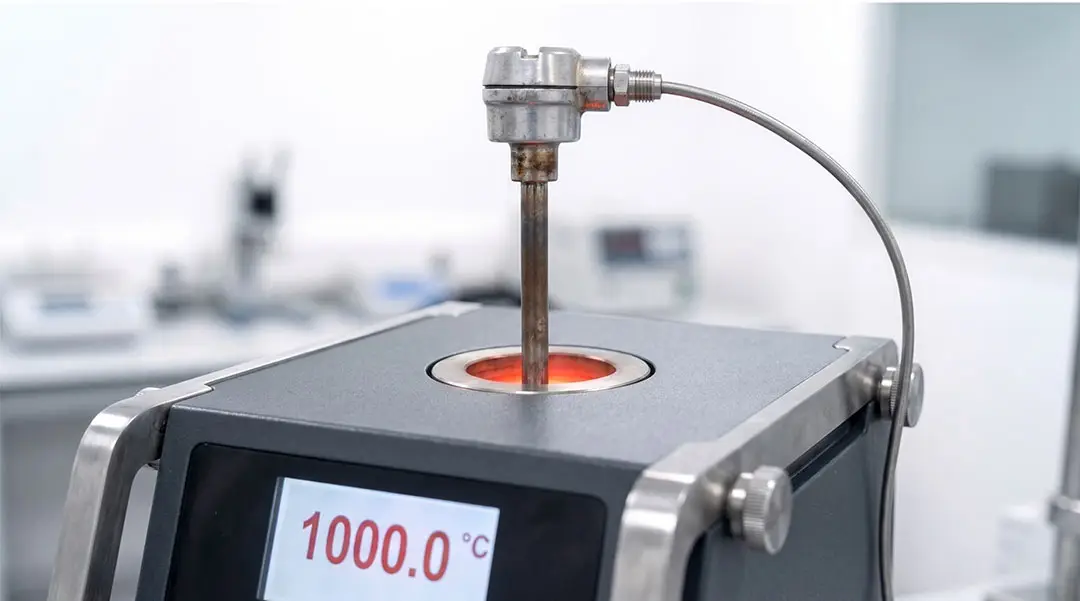

High Potential “Hipot” Tester Calibration: Voltage, Leakage Current, and Trip Function Verification
A hipot tester is the last line of defense between a product with failed insulation and the person who plugs it in. If the tester’s voltage reads high, products are under-stressed. If its trip threshold drifts up, defective units pass. Either way, the tester reports PASS.
Hipot tester calibration verifies that the instrument applies the voltage it reports, measures leakage current correctly, and fails a product when it should. This guide covers how hipot testing works, what calibration must verify, and the safety and accuracy issues that matter.
Hipot Testing Fundamentals
Dielectric Strength Testing Principles
A hipot (high potential) test, also called a dielectric withstand test, applies a high voltage between a product’s current-carrying conductors and its accessible metal parts or ground. The insulation should withstand the voltage without breaking down. The tester measures the resulting leakage current and fails the product if current exceeds a set limit or if breakdown occurs.
Product safety standards define the test voltage, duration, and limits. Hipot testing is a routine production-line test for electrical equipment, appliances, power supplies, and medical devices.
AC and DC Hipot Applications
AC hipot stresses insulation in both polarities, as it will be stressed in normal service, and is the default in many product standards.
DC hipot avoids the capacitive charging current that AC testing draws, which makes it useful for highly capacitive products such as long cables and some motors. DC test voltage is typically set higher than the AC value, often about 1.414 times the AC voltage, to match the peak stress. The product must be discharged after a DC test.
Many testers also include ramp-up control, dwell timing, arc detection, and combined ground bond and insulation resistance functions.
Safety Considerations
Hipot testers generate lethal voltages. Safe use depends on guarded test stations, interlocks, trained operators, and correct discharge procedures. Calibration supports safety by confirming that the tester’s output, measurement, and trip functions behave as specified.
Calibration Requirements
Voltage Accuracy Verification
Output voltage is measured at multiple setpoints across the range for each output mode, AC and DC, using a calibrated high voltage divider or high voltage meter. The tester’s displayed voltage is compared to the measured value.
Current Measurement Calibration
Leakage current measurement is verified by applying known loads, typically precision resistors, and comparing the tester’s current reading to the calculated or measured value at multiple points.
Timer and Trip Function Testing
The trip function is the pass/fail decision. Calibration verifies that the tester trips at its high current limit setting, and at its low limit where fitted. Ramp and dwell timers are checked against a reference timer. Arc detection and ground bond functions are verified where the instrument includes them.
Safety and Accuracy Issues
High Voltage Safety Concerns
Calibrating a hipot tester means working at the same lethal voltages it produces. It requires appropriate high voltage standards, guarded setups, and technicians trained in high voltage work. Do not open or adjust a tester in the field without that equipment and training.
Voltage Regulation Accuracy
A tester may read correctly with no load and sag under the load of a real product. Output regulation should be checked under load, because a tester that cannot hold voltage on a capacitive product under-tests it.
Leakage Current Measurement Precision
Trip limits are often set close to the product’s normal leakage. Small measurement errors move the pass/fail line. If the current reading is off by the same margin as your limit, you are either failing good product or passing bad product.
Why Calibration Matters for Compliance
Product certification bodies inspect production facilities, and calibration records for production-line test equipment are part of what they review. A hipot tester without a current calibration certificate puts every unit tested since the last good calibration into question.
Professional Calibration Benefits with EML
EML Calibration is ISO/IEC 17025:2017 accredited by Perry Johnson Laboratory Accreditation, with NIST-traceable electronic calibration and on-site service nationwide.
- Comprehensive functional testing. Output voltage, leakage current, trip limits, and timers, with as-found and as-left data.
- Safety compliance verification. Documentation that supports product certification body and quality system audits.
- Tracked due dates. The EML asset management platform sends automated expiration notifications.
Frequently Asked Questions
What is a hipot tester?
A hipot tester, or dielectric withstand tester, applies a high voltage between a product’s live conductors and its accessible parts or ground to confirm the insulation can withstand it. It measures leakage current and fails the product if current exceeds a set limit or insulation breaks down.
What is verified during hipot tester calibration?
Calibration verifies output voltage accuracy at multiple setpoints, leakage current measurement accuracy, trip limit function, ramp and dwell timer accuracy, and any arc detection or ground bond functions the tester includes.
What is the difference between AC and DC hipot testing?
AC hipot stresses insulation in both polarities, as in normal service. DC hipot avoids capacitive charging current, which suits highly capacitive products, and is usually set to a higher voltage, often about 1.414 times the AC value, to match peak stress.
Get Your Electrical Safety Testers Calibrated
Send us your tester make, model, and quantity, and tell us whether you need in-lab or on-site service. Request a Quote